

Autumn Baking Series, Part 1: The Foundation
Be a better baker, not a better recipe follower.


(Play while reading this first section.)
THE FIRST REAL COLD NIGHT in Roxbury, CT, flips a switch of something primal deep within. I have a compelling need to turn on the oven, to fill the house with the wafting scents of cinnamon, ginger, and nutmeg, to transmogrify simple ingredients like flour, butter, sugar, and fruit into something golden, comforting, and life-sustaining. [Sigh…]
Now that we've got that mid-’90s Martha claptrap over with, autumn means one thing to me: donning sweats and a hoodie then baking and eating nonstop for the rest of the year.
And I thought I’d take you along for the ride.
But instead of just throwing a bunch of recipes at you (which I do below), I wanted to give you information that can help you be a better baker, not just a better recipe follower.
What’s that old proverb incorrectly attributed to the Bible?1 Oh, yeah: “Give a baker a recipe, and she’s happy for a day. Teach a baker the whys of a recipe, and get the hell out of her way, because she’ll be grooving for life.”
In a recent Instagram Live with Nancy Mock of Hungry Enough to Eat Six, we talked about the creaming method—how the sharp edges of sugar crystals cut into butter, creating tiny air pockets that give a cake its lift and tender crumb. And it seemed to interest our viewers. That simple “why” is the key. When you understand the basic science, you’re no longer just blithely following instructions; you’re actively taking part in the process.
This is the first in a series of posts I’ve designed to guide you through that science in non-technical, non-jargony, non-eyes-glaze-over terms.
First, we’ll discuss the most fundamental building blocks: your ingredients.
☞ CAVEAT: I ain’t no food scientist! I’m just a writer standing in front of a reader, asking them to indulge me.

This first post is free for everyone, but the remaining posts will be for paid subscribers only. If you’d like to have access to them over the next two weeks, subscribe here!
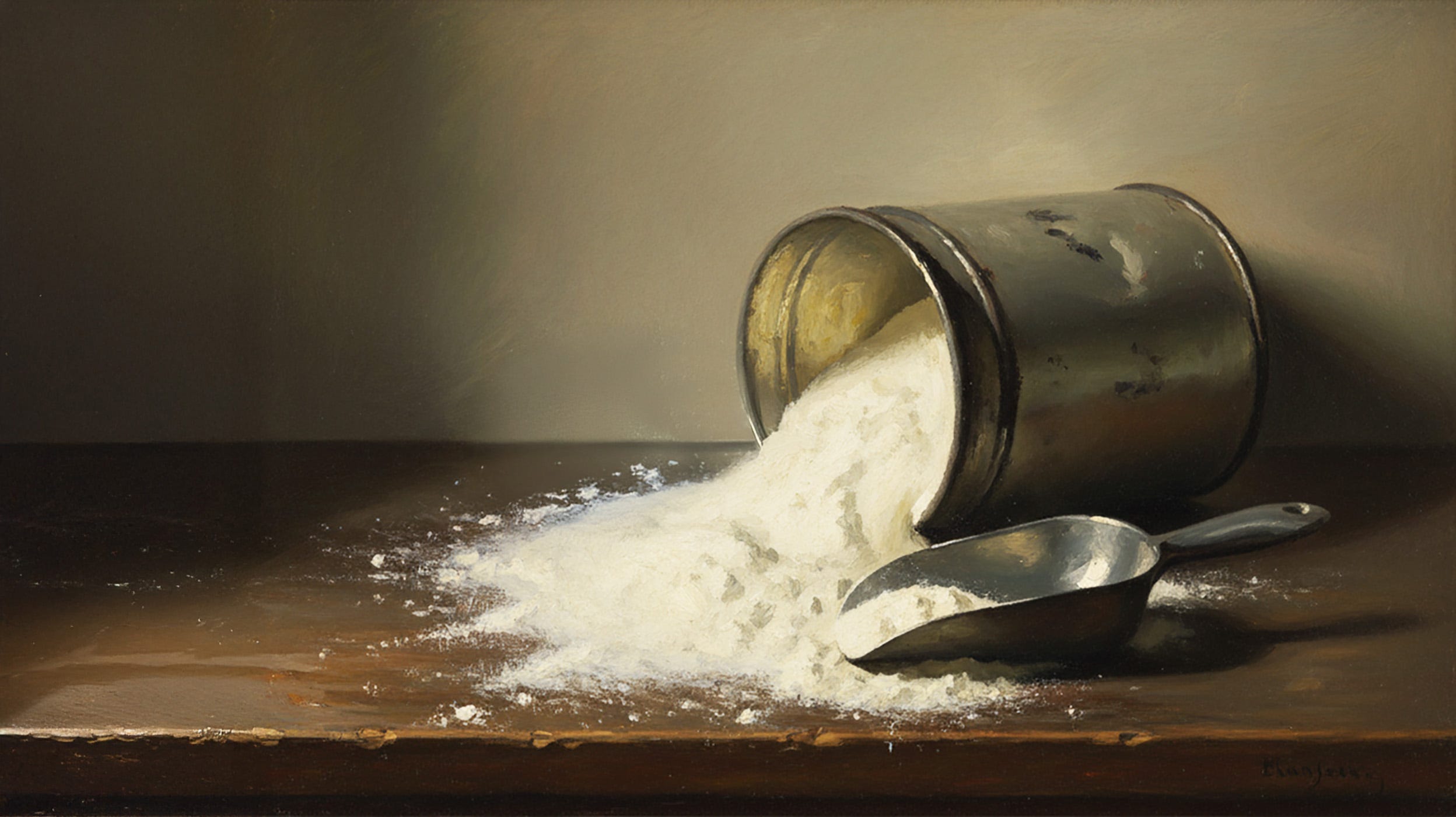
1. Flour Power: Protein, Gluten, and the Perfect Crumb
Flour seems simple, but it’s the main architect of your baked goods. And it all has to do with protein. The amount of protein in your flour dictates its destiny. When flour is mixed with water (or ingredients that contain water, like milk, buttermilk, and coffee) and then stirred, mixed, beaten, or kneaded, two of these proteins link up to form gluten.
Think of gluten as an elastic net. The more you work it, the stronger and chewier that net becomes.

When you want a strong gluten network: Think of crusty bread, like the filone above. You knead the hell out of the dough to build a robust gluten structure that can trap the gases produced by yeast. The result: A lofty, chewy loaf. This is where bread flour (12-14% protein) shines.


When you want a weak gluten network: Think of a delicate, tender cake (like my sour cream coffee cake or Rose Levy Beranbaum’s white chocolate whisper cake) or a flaky pie crust. The goal here is to minimize gluten development. Overmixing a cake batter is disastrous because it creates a tough, rubbery crumb. This is why I reach for cake flour (7-8% protein) or pastry flour (8-9% protein) for a wee-bit-sturdier, but still tender, pastries.
All-purpose flour (10-12% protein) is the versatile middle ground, designed to handle most bakes reasonably well.
But swapping one for another without understanding the consequences is a gamble. (Or in our house, grounds for divorce.) Using bread flour in a cake will make it tough; using cake flour in a bread will turn out a 90-pound-weakling loaf that can’t hold its shape. Understanding protein is your first step toward controlling texture.
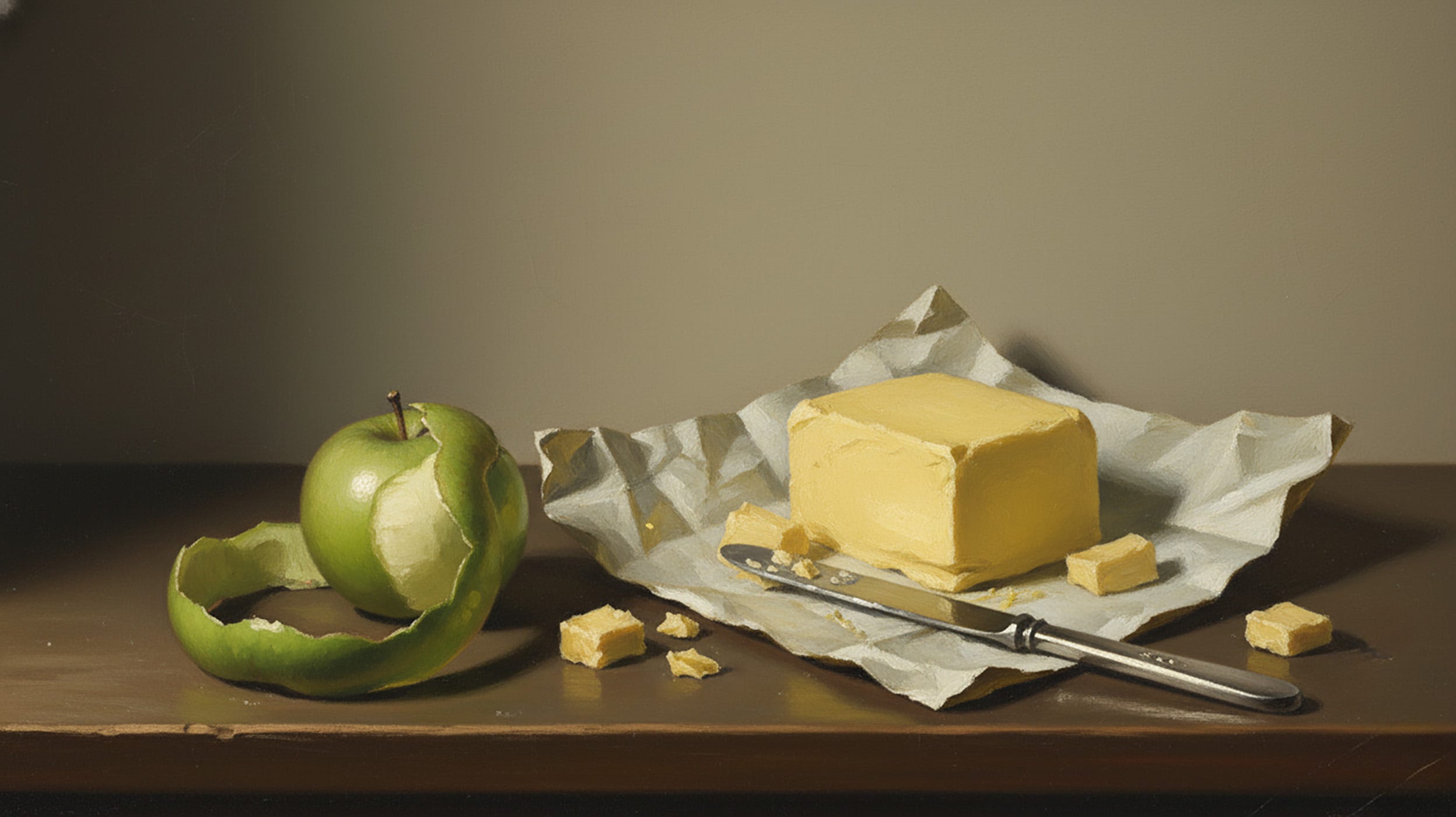
2. Fat’s Crucial Role: Butter, Oil, and Shortening
Fat is flavor. Fat is good. (And by extension, I am fat, therefore I am good!) But fat’s role in baking is far more structural. The type of fat you choose and its temperature are critical decisions that define the final texture.

Butter: The undisputed QUEEN of flavor. It’s made of fat, milk solids, and about 15% to 18% water. When you use it cold and cut it into flour (for pie crusts or biscuits), the butter pieces remain intact. In a hot oven, the water in the butter turns to steam, pushing apart the layers of dough and creating those coveted flaky pockets. When room-temp butter is creamed with sugar, there are no longer pockets, but it still helps with leavening.


Oil: Oil is a 100% liquid fat. Because it’s a liquid, it coats flour particles more completely than solid fats, effectively shortening gluten strands and creating an exceptionally moist, tender crumb. This is why many recipes for carrot cake, chiffon cake, or Hershey’s famous chocolate cake call for oil—they are prized for their supreme moisture. There’s a trade-off, though: What you gain in moisture, you lose in lift, as oil can’t be creamed to hold air.

Shortening: Like oil, shortening is 100% fat, but it’s solid at room temperature. It has a higher melting point than butter, which means in things like cookies or bars, it melts later in the baking process, leading to less spread and a softer, thicker bake. It produces very tender results but offers zilch, nada, nichts of butter's rich flavor. (And, yes, it’s loaded with trans fats, too.)
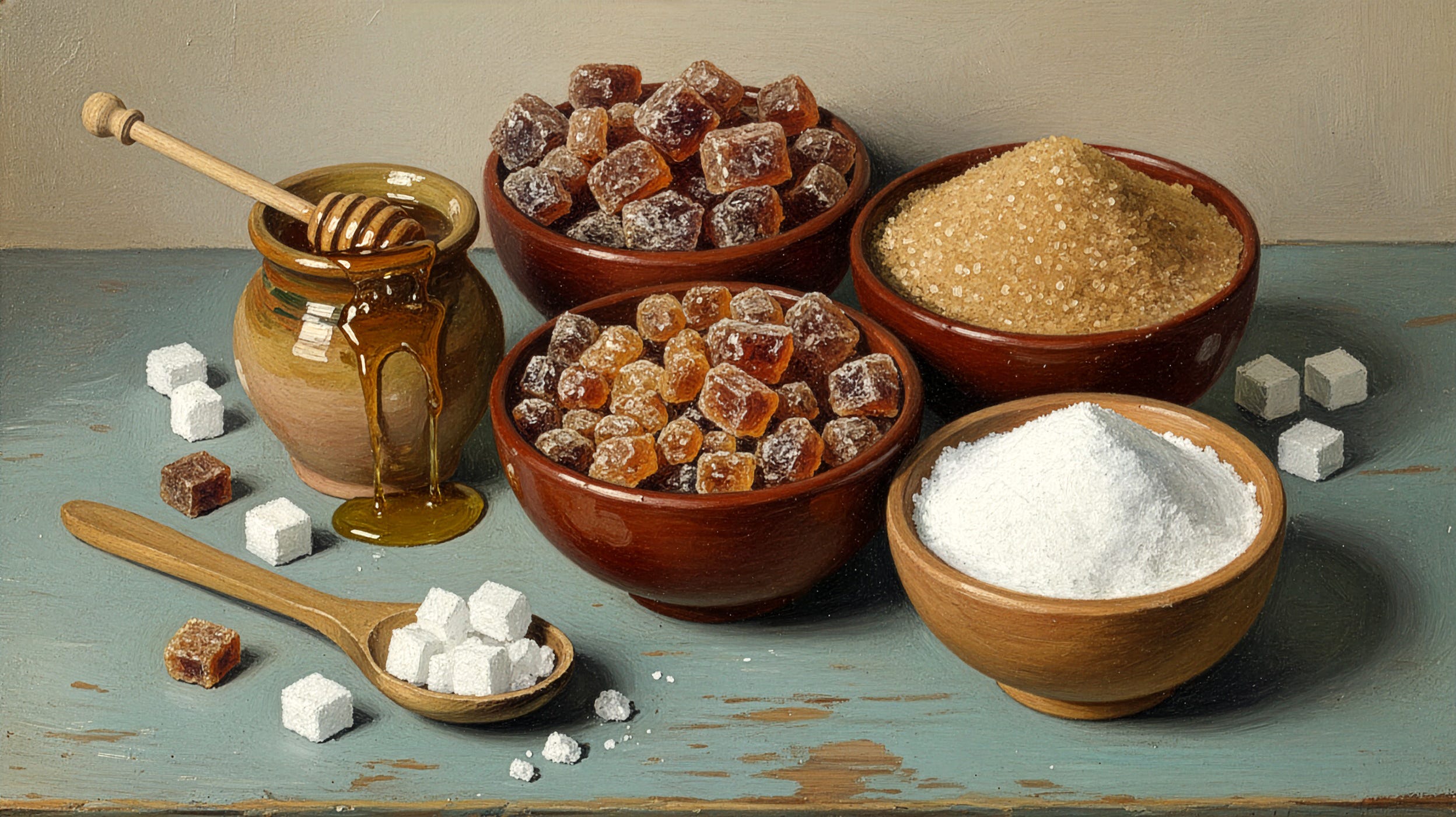
3. The Science of Sweetness: Not Just for Flavor
Sugar is the Marvel superhero that does much more than just sweeten. It’s key to texture, color, and shelf life.

It’s Tenderizing: Sugar is hygroscopic, meaning it attracts and holds onto water. By hogging the water in a batter, it prevents the flour from absorbing it all, which inhibits gluten development (remember: flour + water + agitation = gluten formation) and results in a more tender bake.

It Promotes Browning: That beautiful golden-brown color on your cookies and cakes? Thank sugar. It’s responsible for two browning reactions: caramelization (what happens when sugar itself is heated) and the Maillard reaction (a reaction between sugars and proteins/amino acids).

It’s Leavening: As I mentioned in my Insta Live, creaming granulated sugar with butter creates air pockets that give baked goods a head start on rising.
The type of sugar matters, too. Granulated sugar provides a clean sweetness and promotes a crispier texture. Brown sugar contains molasses, which adds moisture and acidity, leading to softer, chewier results (think chewy chocolate chip cookies). The acid in brown sugar also reacts with baking soda. Powdered sugar contains cornstarch and dissolves instantly, making it ideal for smooth icings and glazes.
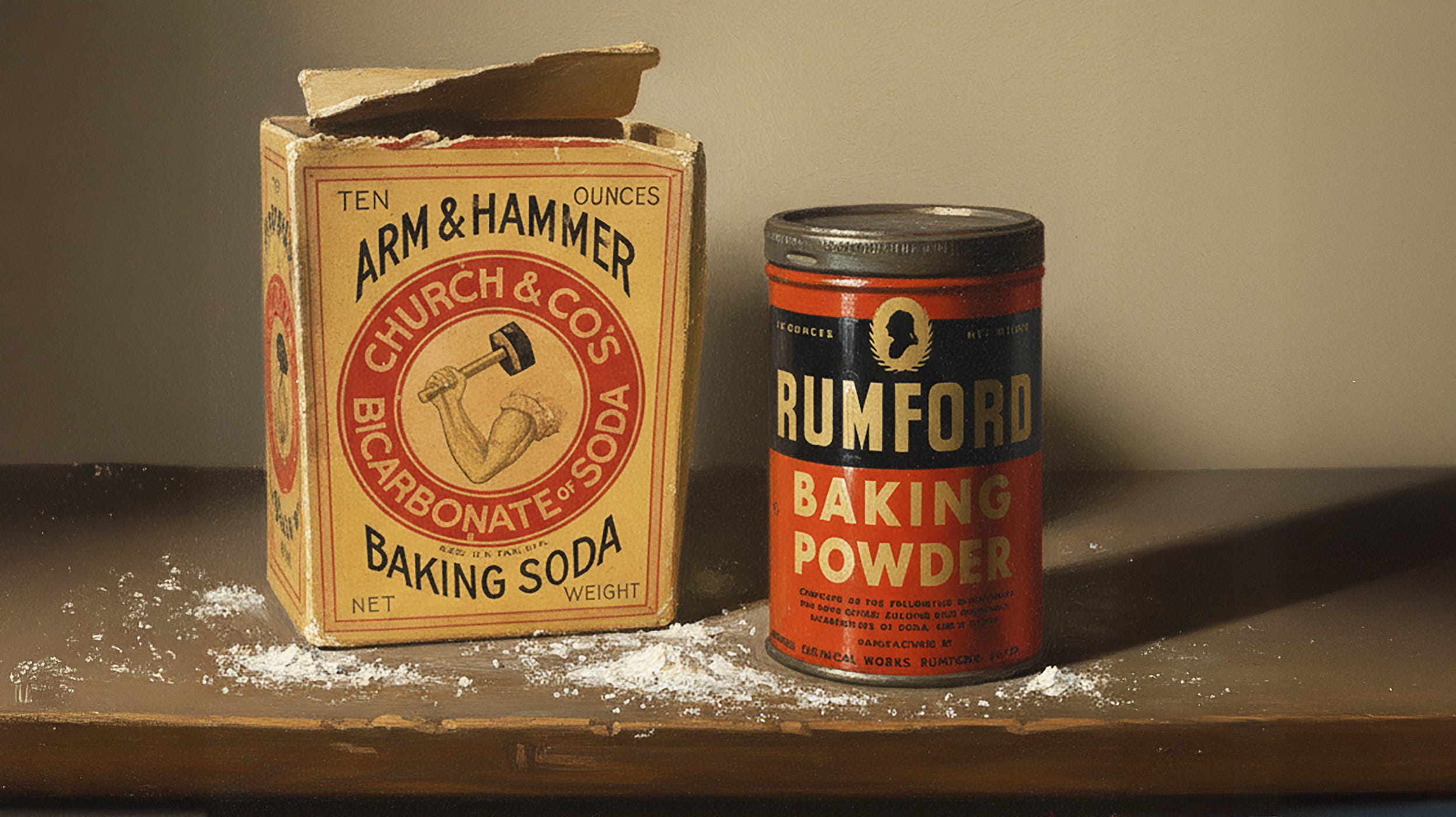
4. Leavening Explained: The Magic of (Face) Lift
Leavening is what stands between you and a dense, flat puck of a cake. It’s the woo-woo that creates lift, and it comes from three primary sources.

Chemical Leaveners: These create carbon dioxide gas2 through chemical reactions.
Baking Soda: It’s a base (alkali). It needs an acid to react with—think buttermilk, yogurt, lemon juice, brown sugar, or even natural cocoa powder. The reaction begins the moment it gets wet, so you need to bake your batter quickly.

Baking Powder: This is baking soda with the acid already built in, plus a starch to keep them separate. Most are “double-acting,” meaning they produce a small amount of gas when they get wet, and a second, larger burst when they get hot in the oven. It’s a more reliable, time-controlled leavener.

Mechanical Leaveners: This is leavening created by sheer, old-fashioned elbow grease.
Creaming: Forcing air into fat, as mentioned above.
Foaming: Vigorously whipping eggs, egg whites, or cream. The proteins in the eggs create a web that traps air bubbles. When heated, the air expands, lifting the batter. This is the sole leavener in an angel food cake.

Steam: The simplest leavener of all. In very wet batters or doughs exposed to high heat, the water inside turns to steam and expands dramatically. This is what inflates a popover, a cream puff, and the layers of puff pastry.
5. The Incredible Edible Egg: More Than a Binder
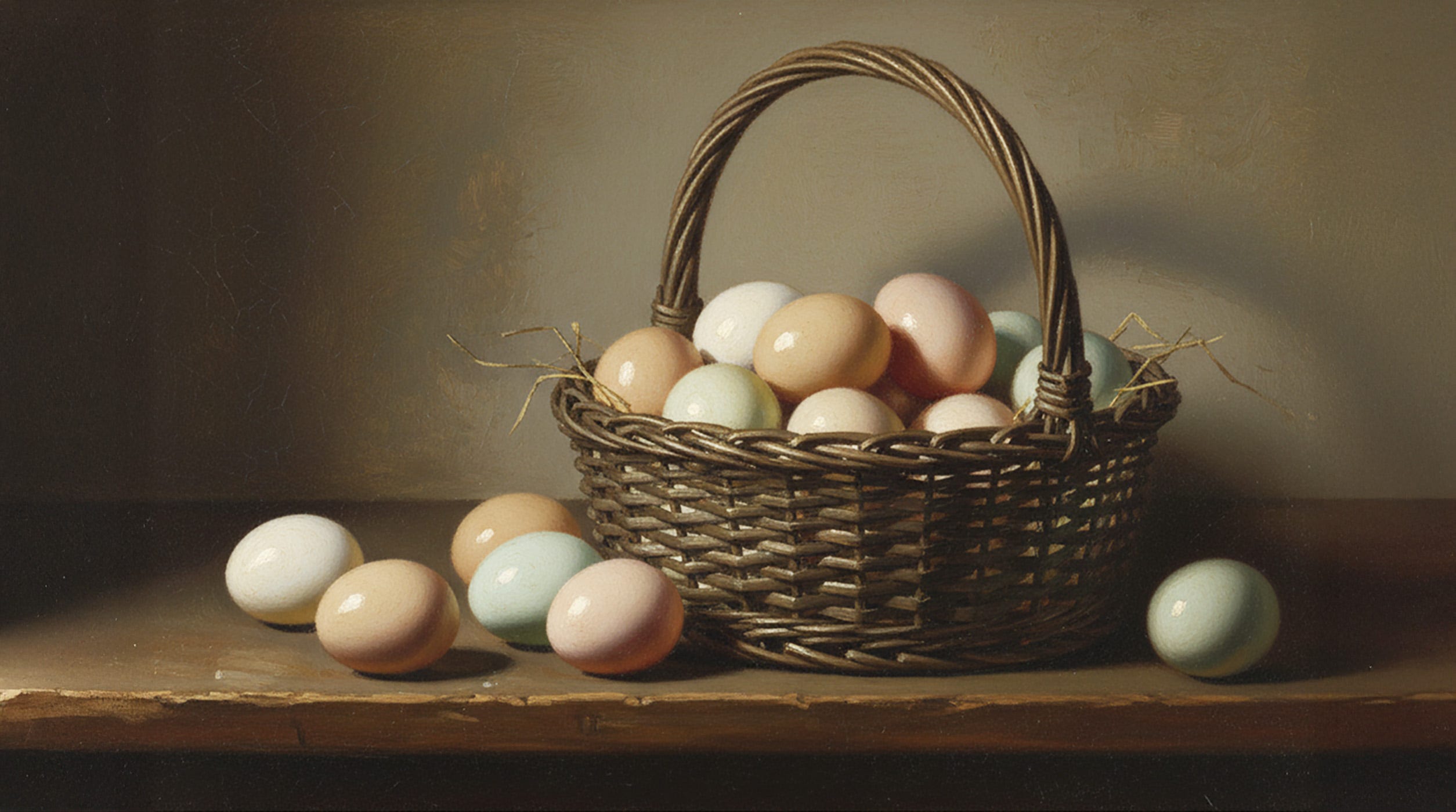
Eggs are the Swiss Army Knife of the baking world, doing at least four critical jobs in one neat package. And doing it mighty well.

Structure: As eggs cook, their proteins coagulate and set, providing the scaffolding that holds a cake up and prevents it from collapsing. It’s the difference between a cake and a nervous breakdown.

Leavening: Whipped eggs and egg whites are masters at trapping air, which expands upon heating to provide Herculean lift.
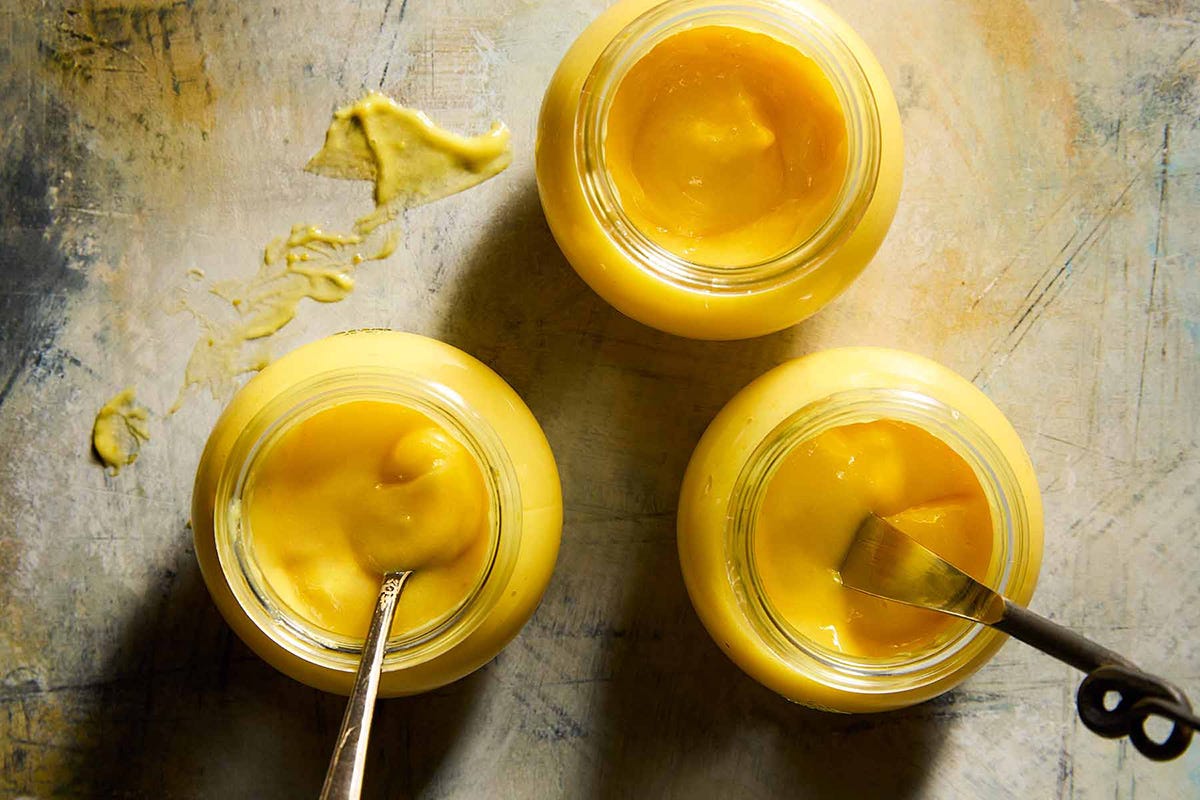
Emulsification: Egg yolks contain lecithin, a natural emulsifier that helps fats and liquids stay mixed together in a smooth, uniform batter.

Fat, Flavor, and Color: The yolk contributes richness, a savory flavor note, and a warm, golden hue.
Why room temperature? Cold eggs can cause the butter in a creamed mixture to cool and curdle. At room temperature, eggs mix more evenly into a batter and are able to trap a heck of a lot more air when whipped, resulting in a lighter final texture.
6. The Hydration Balance: Milk, Buttermilk, and Water
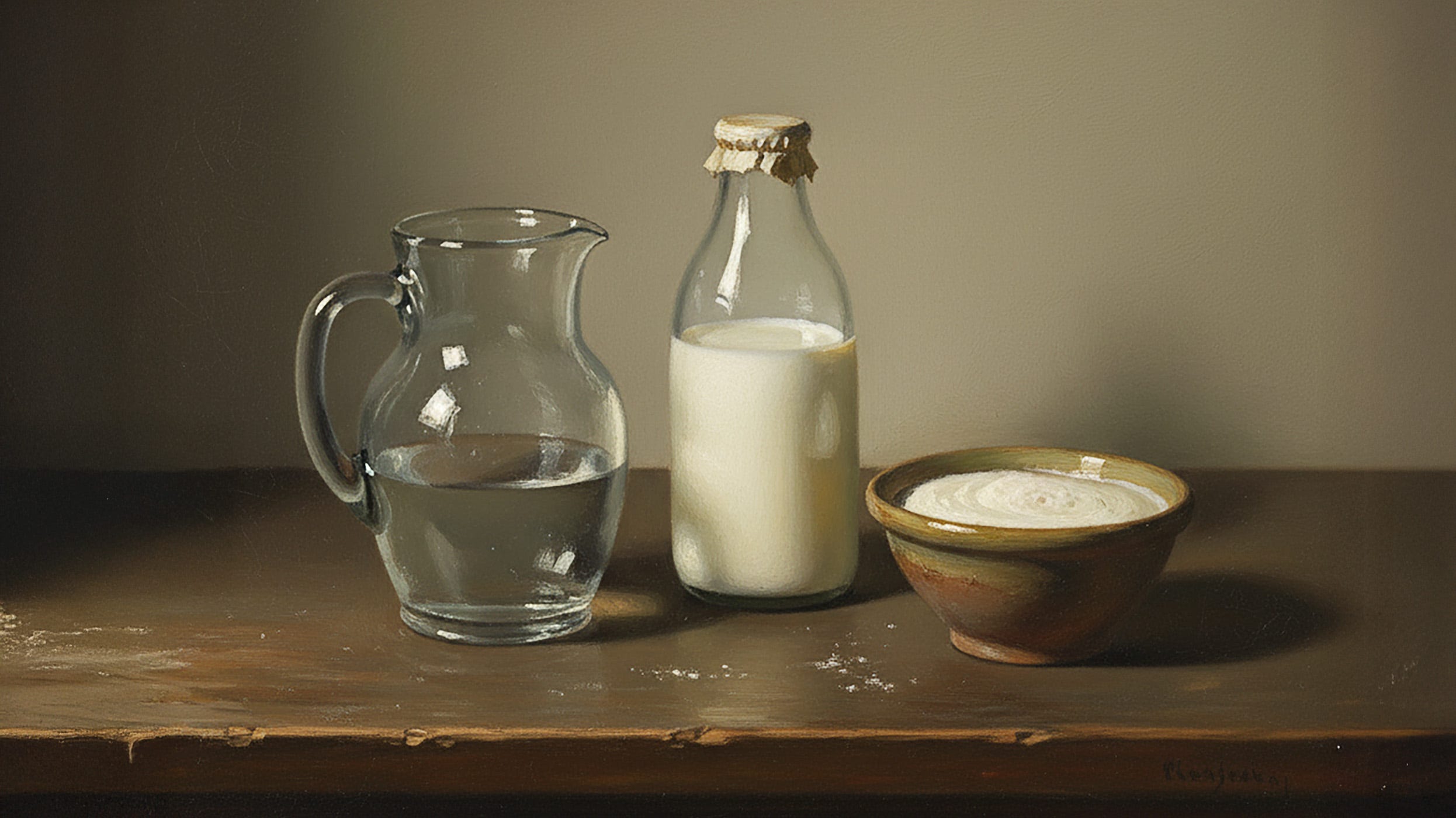
The final piece of our foundational ingredients is liquid. Hydration activates leaveners, allows gluten to form, and moistens the batter. But not all liquids are created equal.
Water: The most basic hydrator. It’s neutral and its primary purpose is to moisten flour and dissolve other ingredients.

Milk: Provides moisture but also adds fat (for tenderness), sugar (lactose, for browning), and protein (for structure). It creates a richer, more velvety crumb than water.

Buttermilk: This is the baker’s secret weapon. Its key feature is acidity. That acid does two wonderful things: it tenderizes gluten, leading to an exceptionally soft crumb, and it reacts powerfully with baking soda to provide an extra boost of leavening.
Understanding the neat properties of each ingredient transforms a recipe from a set of rigid rules into a flexible, friendly formula. Copy and paste it into the Notes app on your phone, print it out and tape it to your cabinet door, or have it tattooed on the inside of your arm for easy reference. And use it through the holidays to tweak your favorite bakes so they bend to your will (he says, as only a true Control Queen can).
Chow,

P.S. Won’t you consider tapping the ♥️, restacking this post, and/or leaving a comment? It takes but a moment, but its impact is enormous! xx
The real proverb—“If you give a man a fish, he is hungry again in an hour. If you teach him to catch a fish, you do him a good turn.”—was actually penned by the British author Anne Isabella Thackeray Ritchie in her 1885 novel, Mrs. Dymond.
Carbon dioxide (CO₂) is a common, invisible gas made of carbon and oxygen, naturally found in the air we breathe out and used by plants. In baking, baking soda and baking powder are designed to produce this same gas when mixed with other ingredients and/or heated. These tiny gas bubbles get trapped in the batter or dough, expanding as they warm in the oven, causing the baked good to rise and develop a light, airy texture.